
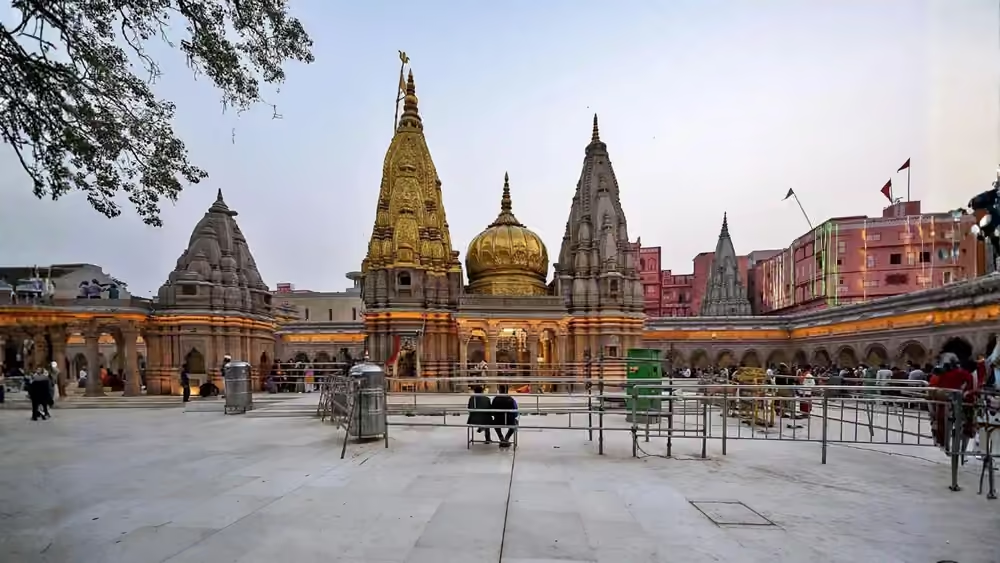
Hello. I am Rohit. I work as a guide in India. Over the last eight years, I have helped many pilgrims. Every single week, there is always at least one pilgrim who wants to know: "Bhaiya, pehle Varanasi jayein ya Ayodhya?" Should we go to Varanasi first or Ayodhya?
If I'm being honest — it depends on where you're traveling from, what you'd like to experience, and how long you plan to stay. Both Varanasi (or Kashi) and Ayodhya are considered some of India's most sacred locations. Varanasi is known as the home of Lord Shiva, while Ayodhya is the birth place of Lord Rama. The cities are approximately 200 km away from one another and are easily accessible via train or automobile. In addition to being accessible, both of these cities can provide an emotional experience.
I've led many pilgrims on their journeys to both cities. I've watched as some groups began their pilgrimage in Varanasi and ended in Ayodhya. I've also observed other groups that reversed this route. I can tell you that there is no one "right" way to travel. However, there is a better way for you to travel.
This guide will help you decide.
Let us begin.
Why the Order Matters
Your visit will be impacted by the sequence in which you choose to visit each location. There are three ways this can happen; it can affect the way that you travel, the spiritual nature of your visit, and how comfortable you feel throughout your trip.
Travel logistics: Varanasi is a large airport and train center. Although Ayodhya has improved its transportation connections significantly in the last couple of years, it is still much smaller than Varanasi. Therefore, if your trip begins in Varanasi, there will be more ways to get to Ayodhya. If your trip begins in Ayodhya, there are likely going to be fewer direct flights or trains.
A Pilgrim's Spiritual Journey: Some pilgrims will start with Kashi as this city is known for being a place of purification. The Ganga snan, the Vishwanath darshan, and the Ganga Aarti all help to establish a feeling of submission. After visiting Kashi, these pilgrims can continue to Ayodhya to see Ram Lalla. Conversely, some pilgrims will start with Ayodhya as they primarily want to visit Ram Mandir, and then travel to Kashi to experience the Ganga and Shiva.
Comfort: The order of your trip will have an effect on how tired you feel. You may find that if you have just finished a long trip and are going directly into a very busy city that has many temples and crowds, you are extremely tired. Many of the pilgrims that I know would rather go into a quieter city first before going into a busier one.
The Core Comparison: Varanasi First vs Ayodhya First
| Factor | Varanasi First | Ayodhya First |
|---|---|---|
| Best if coming from | South, West, East India | Delhi, Lucknow, North India |
| Main attraction | Kashi Vishwanath, Ganga Aarti | Ram Mandir, Hanuman Garhi |
| Travel hub | Larger airport, more trains | Smaller airport, fewer trains |
| Spiritual flow | Shiva → Rama | Rama → Shiva |
| Trip length | Longer (more to see) | Shorter (more focused) |
| Best for | First-time pilgrims | Ram Bhakts |
| Return travel | Easy from Varanasi | Easy from Ayodhya to Delhi |
| Crowd level | Higher (always busy) | Lower (except festivals) |
| Hotel options | More, across budgets | Fewer, but improving |
When Varanasi First Is Better
1. You are coming from South, West, or East India.
Varanasi has a major airport (Lal Bahadur Shastri International Airport) with direct flights from Delhi, Mumbai, Bengaluru, Chennai, and other cities. Ayodhya's airport is newer and has fewer connections. If you are flying in, Varanasi is easier to reach.
2. You want to end at a major airport.
If you start in Varanasi, you can end in Ayodhya and then take a train or cab back to Varanasi for your return flight. Or you can fly out of Ayodhya if a flight is available. But ending in Varanasi gives you more options.
3. You want the full spiritual progression.
Many pilgrims prefer to begin with Kashi, the city of Lord Shiva. They take a dip in the Ganga, visit Kashi Vishwanath, and attend the Ganga Aarti. Then they proceed to Ayodhya for the darshan of Ram Lalla. It feels like a natural progression from Shiva to Rama.
4. You have more time.
Varanasi has more to see — the ghats, Sarnath, the temples, the boat rides. It deserves at least 2 full days. Ayodhya can be covered in 1–2 days. So if you have 5–6 days, starting in Varanasi gives you a more relaxed pace.
5. You want better hotel and food options.
Varanasi has a wider range of hotels, from budget dharamshalas to luxury properties. It also has more restaurants and cafes. Ayodhya is improving, but Varanasi still leads in infrastructure.
When Ayodhya First Is Better
1. You are coming from Delhi or Lucknow.
Ayodhya is closer to Delhi (630 km) than Varanasi (820 km). If you are driving or taking a train from Delhi, Ayodhya is the natural first stop. From Lucknow, Ayodhya is just 135 km away.
2. Your main focus is Ram Mandir.
If your primary goal is Ram Lalla darshan, then starting in Ayodhya makes sense. You can go straight to the temple, have darshan, and then proceed to Varanasi for the rest of your trip.
3. You want a shorter, more focused trip.
If you have only 3–4 days, starting in Ayodhya allows you to cover the main sites quickly. Ayodhya has fewer attractions than Varanasi, so you can finish it in 1–2 days and then move on.
4. You want to avoid the crowds of Varanasi first.
Varanasi is always busy. If you want to start your pilgrimage in a quieter place, Ayodhya is calmer (except during festivals like Ram Navami and Diwali). You can ease into the spiritual experience before facing the intensity of Kashi.
5. You are travelling with elderly parents or young children.
Ayodhya is more manageable. The temples are closer together, the crowds are smaller, and the pace is slower. Starting there can be less overwhelming.
Distance and Travel Time Between the Two Cities
| Route | Distance | Time (Cab) | Time (Train) | Time (Bus) |
|---|---|---|---|---|
| Varanasi to Ayodhya | 200 km | 4–5 hours | 2.5–5 hours | 5–6 hours |
| Ayodhya to Varanasi | 200 km | 4–5 hours | 2.5–5 hours | 5–6 hours |
No difference in distance. The order only affects your starting and ending point. The travel time is the same in both directions.
How to Travel from Varanasi to Ayodhya
By Train:
-
Vande Bharat Express (22489) departs Varanasi at 09:10 AM, arrives Ayodhya at 11:34 AM (2h 24m)
-
Vande Bharat Express (22345) departs Varanasi at 09:32 AM, arrives Ayodhya at 12:10 PM (2h 38m)
-
Other express trains take 3–5 hours
-
Fares: ₹150–₹1,305 depending on class
By Private Cab:
-
4–5 hours via NH-233 through Jaunpur and Sultanpur
-
Cost: ₹3,300–₹5,400 (sedan), ₹5,400+ (SUV)
By Bus:
-
5–6 hours
-
Cost: ₹200–₹500
By Flight:
-
No direct flights. You would need to fly via Delhi or Lucknow.
How to Travel from Ayodhya to Varanasi
The options are the same as above, just in reverse. Trains run in both directions. Cabs are available. Buses operate daily.
Important: If you are taking a train from Ayodhya to Varanasi, check the departure station. Some trains leave from Ayodhya Dham Junction, others from Faizabad Junction.
Sample Itineraries for Both Orders
Varanasi First – 5 Days
| Day | Activity |
|---|---|
| 1 | Arrive Varanasi. Visit Kashi Vishwanath, Annapurna Temple. Evening Ganga Aarti at Dashashwamedh Ghat |
| 2 | Early morning boat ride. Visit Sankat Mochan, Durga Temple, Tulsi Manas Mandir. Afternoon: Sarnath |
| 3 | Morning: Travel to Ayodhya (200 km, 4–5 hours). Afternoon: Check in. Evening: Saryu Aarti at Ram Ki Paidi |
| 4 | Full day Ayodhya. Ram Mandir, Hanuman Garhi, Kanak Bhawan, Dashrath Mahal, Nageshwarnath Temple |
| 5 | Morning: Last darshan at Ram Mandir. Departure from Ayodhya or return to Varanasi |
Ayodhya First – 4 Days
| Day | Activity |
|---|---|
| 1 | Arrive Ayodhya. Visit Ram Mandir, Hanuman Garhi, Kanak Bhawan. Evening: Saryu Aarti |
| 2 | Morning: Mani Parvat, Sugriv Kila. Afternoon: Travel to Varanasi (200 km, 4–5 hours). Evening: Ganga Aarti |
| 3 | Full day Varanasi. Kashi Vishwanath, Annapurna, Vishalakshi, Kaal Bhairav. Afternoon: Sarnath |
| 4 | Morning: Boat ride, Sankat Mochan, Durga Temple. Departure |
How to Reach Varanasi
By Air:
-
Lal Bahadur Shastri International Airport (VNS) — connected to Delhi, Mumbai, Bengaluru, Chennai, and other cities
By Train:
-
Varanasi Junction (Cantt) — major railhead
-
Kashi Station and Banaras Station — for some trains
By Road:
-
Well-connected by national highways to Lucknow, Prayagraj, and other cities
How to Reach Ayodhya
By Air:
-
Maharishi Valmiki International Airport (AYJ) — connected to Delhi, Mumbai, and other cities
By Train:
-
Ayodhya Dham Junction — major railhead
-
Faizabad Junction — alternative station
By Road:
-
Well-connected by national highways to Lucknow, Varanasi, and Prayagraj
Where to Stay in Varanasi
| Area | Best For | Price Range |
|---|---|---|
| Near Dashashwamedh Ghat | Ghat access, aarti | ₹1,500–₹5,000 |
| Near Assi Ghat | Quieter, less crowded | ₹1,000–₹3,500 |
| Cantt area | Train access, budget | ₹800–₹2,000 |
| Near Sarnath | Peaceful, Buddhist sites | ₹1,200–₹3,000 |
Where to Stay in Ayodhya
| Area | Best For | Price Range |
|---|---|---|
| Near Ram Mandir | Walking distance to temple | ₹1,500–₹5,000 |
| Near Railway Station | Easy train access | ₹800–₹2,000 |
| Near Saryu River | Scenic, peaceful | ₹1,000–₹3,000 |
| Faizabad Road | Budget options | ₹500–₹1,500 |
Best Time to Visit Both Cities
| Season | Verdict |
|---|---|
| October to March | Best time. Pleasant weather, comfortable darshan |
| April to June | Very hot (30–45°C). Avoid if possible |
| July to September | Monsoon. Humid, occasional flooding |
| Ram Navami (Ayodhya) | Very crowded but deeply devotional |
| Dev Deepawali (Varanasi) | Spectacular but crowded |
Recommendation: October to March. Travel on a weekday for calmer darshan.
What to Carry
Essentials:
-
Modest clothing (shoulders and knees covered)
-
Comfortable footwear
-
Water bottle
-
Cash in small denominations
-
Government photo ID
-
Power bank
-
Sunscreen and cap
-
Personal medicines
What Not to Carry:
-
Large bags
-
Expensive jewellery
-
Electronics inside temples
Budget Breakdown for Your Trip
| Expense | Budget (per person) | Mid-Range (per person) |
|---|---|---|
| Travel (Varanasi to Ayodhya) | ₹150–₹800 (train) | ₹3,300–₹5,400 (cab) |
| Hotel (3–4 nights) | ₹2,400–₹4,000 | ₹6,000–₹12,000 |
| Food (4 days) | ₹1,600–₹2,400 | ₹2,500–₹5,000 |
| Local transport | ₹500–₹1,000 | ₹1,500–₹3,000 |
| Total | ₹4,650–₹8,200 | ₹13,300–₹25,400 |
Note: Temple darshan is free in both cities. There is no entry fee anywhere.
Conclusion
So, is it better to go to Varanasi first or Ayodhya? The answer depends on you. If you are coming from South or West India, start with Varanasi. If you are coming from Delhi or Lucknow, start with Ayodhya. If your main focus is Ram Mandir, start with Ayodhya. If you want a fuller spiritual progression, start with Varanasi.
But here is the truth — the order matters less than the intention. Whether you begin with Kashi or Ayodhya, you will end up in the same place: standing before the divine, with a heart full of gratitude.
Plan well. Travel comfortably. And let both cities work their magic on you.
Jai Shri Ram. Har Har Mahadev.
Plan Your Varanasi-Ayodhya Trip
For bookings, queries, and custom packages:
Call Us: +91 7078723132 | +91 9557104160
WhatsApp Us: +91 7078723132 | +919557104160
Hours: 8 AM to 9 PM daily
Our Services:
-
Varanasi Ayodhya Tour Packages
-
Private AC Cab for the Full Circuit
-
Ram Mandir Darshan Assistance
-
Hotel Reservations in Varanasi / Ayodhya
-
Local Guides in Both Cities
-
Customized Itineraries for Families, Couples, and Groups